


Chianti Wine Road Trip: The Complete Via Chiantigiana Driving Guide for 2025


By GS Auto Team
The GS Auto team brings over 15 years of experience in vehicle rentals and sales across Tuscany. Based in Siena and Torrita di Siena, our local experts share insider tips, travel guides, and automotive advice to help you discover the best of Tuscany.

The legendary Chianti wine region awaits - your ultimate Tuscan road trip starts here
Introduction: Why the Via Chiantigiana is Italy's Most Beautiful Drive
Winding through the heart of Tuscany, the Via Chiantigiana (SR222) is more than just a road—it's a journey through centuries of winemaking history, past medieval castles, and across some of the most photographed landscapes on Earth. This legendary route connecting Florence to Siena passes through the Chianti Classico wine region, where the famous Black Rooster symbol has guaranteed wine quality since 1716.
Whether you're a wine enthusiast eager to taste world-class Sangiovese, a photographer chasing that perfect Tuscan sunset, or simply a traveler seeking authentic Italian experiences, the Chianti wine road trip delivers beyond expectations. This comprehensive guide reveals everything you need to know to plan the perfect journey—from the best wineries and hidden villages to practical driving tips and the ideal time to visit.
Quick Trip Overview
- Route: Via Chiantigiana (SR222) - Florence to Siena
- Distance: Approximately 70 km (direct), 120+ km with detours
- Driving Time: 1.5 hours direct, 6-8 hours with stops
- Recommended Duration: 2-3 days for full experience
- Toll Cost: Free (no tolls on this scenic route)
- Best Time: September-October (harvest) or April-June
- Starting Point: Florence, Siena, or Torrita di Siena
Understanding the Chianti Wine Region
Before hitting the road, it helps to understand what makes Chianti special. The Chianti Classico DOCG zone lies between Florence and Siena, covering approximately 70,000 hectares of vineyards, olive groves, and forests. This isn't just any wine region—it's the birthplace of one of Italy's most celebrated wines, with a winemaking tradition dating back to the Etruscans.
The Black Rooster: Symbol of Quality
You'll see the Gallo Nero (Black Rooster) symbol throughout your journey. This iconic emblem, dating from the medieval League of Chianti, now represents the Consorzio Vino Chianti Classico—your guarantee of authentic, quality-controlled wine from this specific geographic area. Wines bearing this symbol must meet strict production standards and undergo rigorous testing.
The legend behind the Black Rooster involves a boundary dispute between Florence and Siena. According to tradition, each city would release a rooster at cockcrow, and where the roosters met would determine the border. Florence's black rooster, kept hungry, crowed before dawn and ran far, giving Florence more territory—including most of the prime Chianti vineyards.
Wine Types You'll Encounter
- Chianti Classico: Made from at least 80% Sangiovese grapes, aged minimum 12 months
- Chianti Classico Riserva: Premium quality, aged minimum 24 months
- Chianti Classico Gran Selezione: The highest tier, from single estates, aged 30+ months
- Vin Santo: Sweet dessert wine, traditionally served with cantucci biscotti
- Super Tuscans: Premium blends often featuring international grape varieties
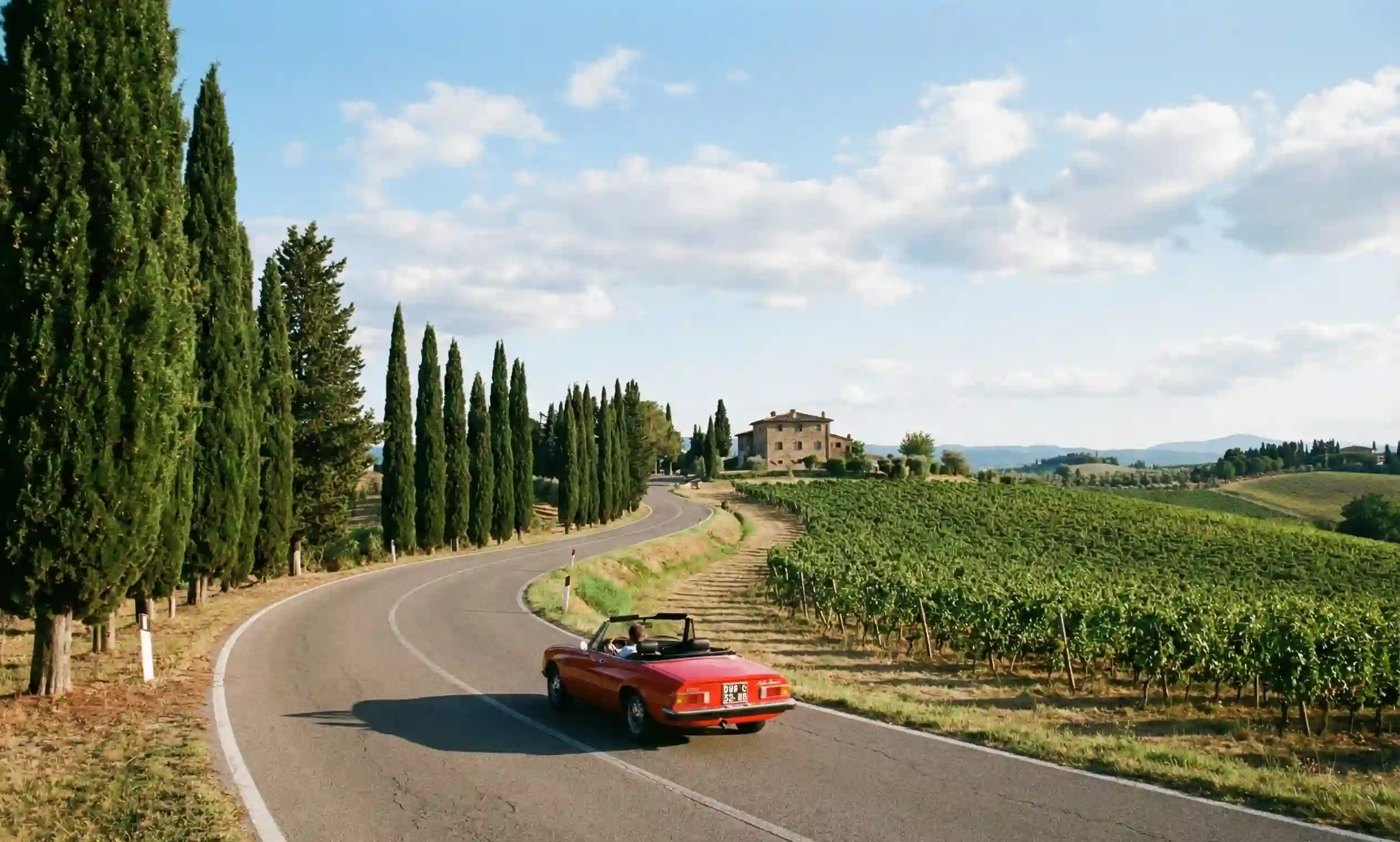
The Via Chiantigiana winds through endless vineyards - one of Italy's most scenic drives
Planning Your Chianti Wine Road Trip
Choosing the Right Vehicle
The vehicle you choose significantly impacts your experience. While the Via Chiantigiana is well-maintained, many wineries and villages are accessed via narrow, winding roads—sometimes unpaved strade bianche (white roads).
Best Vehicle Choices:
- Compact to Mid-size Cars: Ideal for navigating narrow village streets and fitting into small parking spaces. A Fiat 500 or similar offers the authentic Italian experience.
- Small SUVs: Provide extra ground clearance for gravel roads to remote wineries while remaining maneuverable.
- Convertibles: Perfect for warm weather trips when you want to fully immerse in the scenery and fragrances of the countryside.
We strongly recommend against large vehicles, vans, or anything wider than 2 meters for this route. Some medieval village gates are genuinely tight, and winery driveways can challenge even experienced drivers.
GS Auto offers a wide selection of rental vehicles perfect for Chianti exploration. Our compact and mid-size cars are ideal for this journey, and our team can provide personalized recommendations based on your itinerary. With over 15 years of experience serving visitors to Tuscany, we know exactly what works best for wine country roads.
When to Visit: The Best Season for Your Trip
September-October (Harvest Season): The absolute best time to visit. Vineyards burst with ripe grapes, harvest activities are in full swing, and many wineries offer special harvest experiences. The light is golden, temperatures are comfortable (18-25°C), and the landscape is at its most photogenic. Book accommodations and winery visits well in advance.
April-June (Spring): Vibrant green vineyards, wildflowers, and pleasant weather make this an excellent alternative. Fewer tourists than autumn, and many wineries have more availability for tastings.
July-August (Summer): Hot (often 35°C+) and crowded with tourists. If visiting during summer, start early in the morning and take long lunch breaks in air-conditioned restaurants or shaded courtyards.
November-March (Off-Season): Many smaller wineries close or operate limited hours. However, you'll find better hotel rates, no crowds, and a more authentic, local atmosphere. Fog can create magical photos but also challenging driving conditions.
The Complete Via Chiantigiana Route: Florence to Siena
Let's break down the journey into manageable sections, highlighting must-see stops along the way.
Section 1: Florence to Greve in Chianti (30 km)
Departing Florence, you'll leave the city's bustle behind surprisingly quickly. Within 20 minutes, urban sprawl gives way to rolling hills dotted with villas and olive groves.
Key Stop: Impruneta
Just 15 km from Florence, Impruneta is famous for its terracotta production—the distinctive reddish pottery you'll see throughout Tuscany. The town's Basilica di Santa Maria dell'Impruneta houses a venerated Black Madonna icon. In October, don't miss the spectacular Grape Festival (Festa dell'Uva) with historical processions and wine flowing freely.
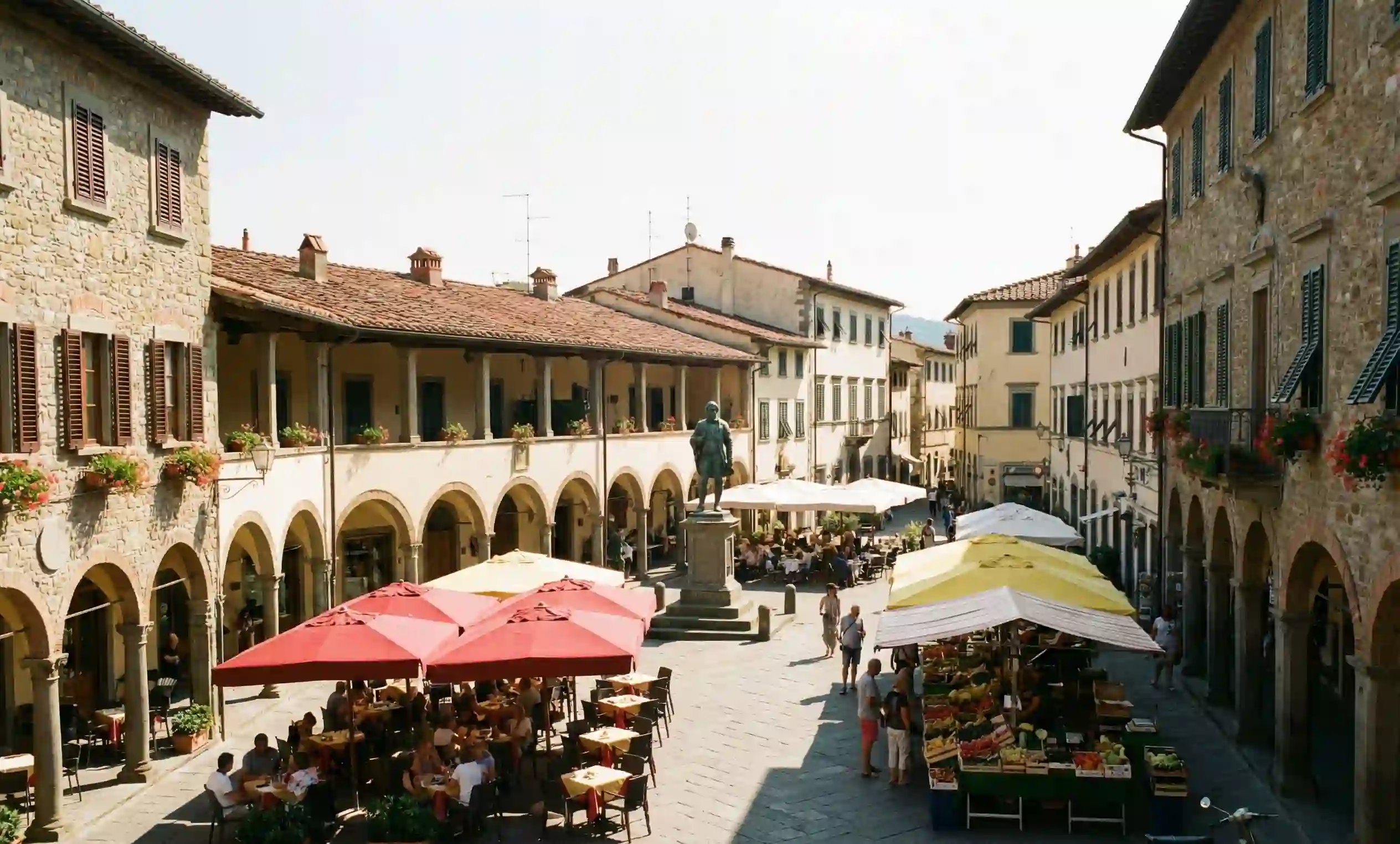
Greve in Chianti's charming Piazza Matteotti - the unofficial capital of Chianti Classico
Major Stop: Greve in Chianti
Often called the "Gateway to Chianti," Greve is the unofficial capital of the Chianti Classico region. The town's distinctive triangular piazza (Piazza Matteotti) is lined with arcaded shops selling wine, olive oil, salumi, and local crafts.
Don't Miss in Greve:
- Antica Macelleria Falorni: A legendary butcher shop dating to 1729, offering tastings of wild boar salami, finocchiona, and other Tuscan specialties.
- Le Cantine di Greve in Chianti: An innovative wine bar with over 100 wines available by the glass through self-serve dispensers.
- Castello di Verrazzano: Just outside town, this historic estate (ancestral home of explorer Giovanni da Verrazzano) offers tours and tastings with stunning valley views.
- Saturday Morning Market: One of Tuscany's best weekly markets, perfect for stocking up on picnic supplies.
Time Needed: 2-3 hours minimum for Greve, plus additional time for winery visits.
Section 2: Greve to Panzano (10 km)
This short stretch climbs into the hills, offering increasingly dramatic views. The road narrows and winds more tightly—a preview of classic Chianti driving.
Key Stop: Panzano in Chianti
This small hilltop village has achieved international fame thanks to one man: Dario Cecchini, the "World's Most Famous Butcher." His Antica Macelleria Cecchini is part shop, part theater, where Dario recites Dante while carving beef and offers free tastings to visitors. The experience is unforgettable—but arrive hungry, as you won't leave without eating.
Beyond the butcher, Panzano's Conca d'Oro (Golden Basin) offers some of Chianti's finest wines. The south-facing slopes provide ideal grape-growing conditions, and several excellent wineries cluster nearby.
Recommended Wineries Near Panzano:
- Fontodi: Organic estate known for exceptional Gran Selezione and the acclaimed Super Tuscan "Flaccianello."
- Casa Emma: Boutique winery with beautiful grounds and intimate tastings overlooking the valley.
- Le Cinciole: Small family winery producing artisanal wines with minimal intervention.
Time Needed: 1-2 hours for the village, 1-2 hours per winery visit.
Section 3: Panzano to Castellina in Chianti (15 km)
The road from Panzano to Castellina is arguably the most scenic stretch of the entire Via Chiantigiana. Prepare your camera and drive slowly—the views demand frequent stops.
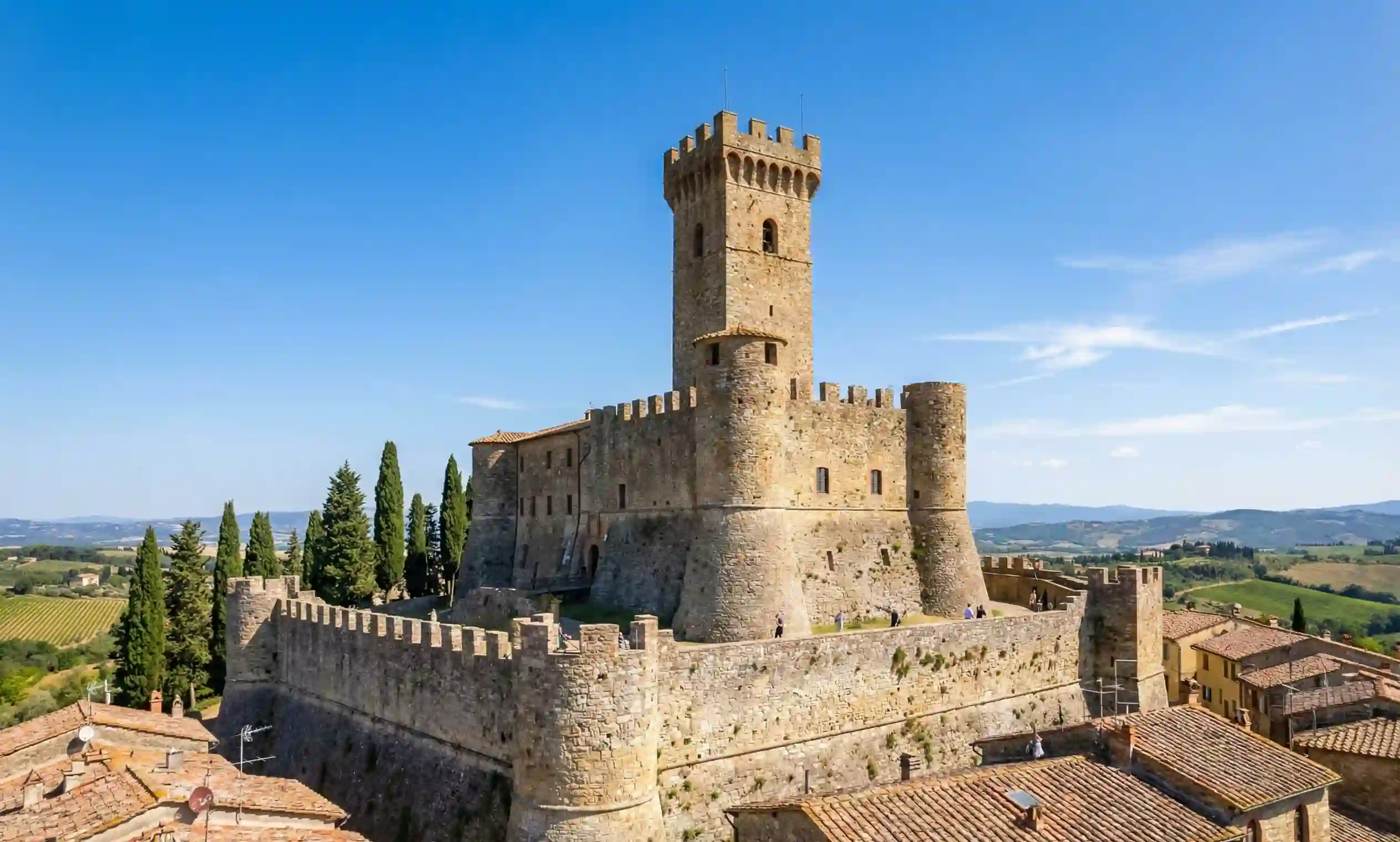
Castellina's medieval fortress once defended the Florentine border against Siena
Major Stop: Castellina in Chianti
This fortified town sits at the geographic and historical heart of Chianti. For centuries, Castellina guarded the Florentine-Sienese border, and its Via delle Volte—a covered walkway within the ancient walls—once served as a defensive passage. Today, it's one of Tuscany's most atmospheric streets, lined with wine shops and restaurants.
Must-See in Castellina:
- Rocca (Fortress): Climb the tower for 360-degree panoramic views across Chianti.
- Via delle Volte: The remarkable tunnel-street carved through the medieval walls.
- Etruscan Tomb of Montecalvario: A 7th-century BC burial mound just outside town, testament to the region's ancient history.
- Enoteca Le Volte: Excellent wine bar under the old walls, perfect for afternoon tastings.
Premier Wineries Near Castellina:
- Castello di Fonterutoli: Historic Mazzei family estate producing exceptional Chianti Classico since the 15th century.
- Rocca delle Macìe: Large, visitor-friendly winery with restaurant and beautiful gardens.
- Nittardi: Unique winery combining wine and contemporary art, with labels designed by famous artists.
Time Needed: 2-3 hours for the town, additional time for wineries.
Section 4: Castellina to Siena (20 km)
The final stretch descends toward Siena, with the city's medieval towers gradually coming into view. You have two options here: continue on the SR222 directly to Siena, or detour through Radda and Gaiole for additional wine experiences.
Optional Detour: Radda in Chianti
This tiny hilltop village was once the capital of the League of Chianti. Its compact historic center, wrapped in medieval walls, can be explored in an hour, but the surrounding countryside hides some of Chianti's finest estates.
Recommended Wineries Near Radda:
- Castello di Volpaia: A stunning fortified village that's been producing wine since 1172.
- Montevertine: Legendary estate known for the cult wine "Le Pergole Torte."
- Castello di Albola: Sprawling historic estate with extensive cellar tours.
Optional Detour: Gaiole in Chianti
Further east, Gaiole offers a more rustic atmosphere and access to some of Chianti's most prestigious producers. The Castello di Brolio—seat of the Ricasoli family, who invented the modern Chianti blend in the 19th century—is an absolute must-visit for wine history enthusiasts.
Essential Driving Tips for the Via Chiantigiana
Road Conditions and Safety
The Via Chiantigiana (SR222) is a well-maintained state road, but it's narrow, winding, and can be challenging for inexperienced drivers. Here's what you need to know:
- Width: The road is typically 6-7 meters wide with no shoulders. Passing requires caution.
- Curves: Numerous blind curves demand constant vigilance. Use your horn on tight bends as locals do.
- Cyclists: Popular with serious cyclists, especially weekends. Pass with care and give ample space.
- Motorcyclists: Fast-moving motorcycles appear frequently. Check mirrors before any maneuver.
- Agricultural Vehicles: Tractors and grape-harvesting machines, especially September-October. Be patient.
Navigation Tips
GPS/Satellite Navigation: Essential but not infallible. Download offline maps (Google Maps or Maps.me) before departure, as cellular coverage can be spotty in valleys.
Following Signs: Brown tourist signs indicate wineries, attractions, and scenic viewpoints. Follow "Strada del Vino Chianti Classico" signs for the official wine route.
Address Challenges: Many wineries lack standard street addresses. Expect directions like "2 km after the church, turn left at the white house." Don't be afraid to call ahead for specific directions.
ZTL Zones (Restricted Traffic Areas)
Most Chianti villages have ZTL (Zona Traffico Limitato) zones—camera-enforced restricted areas in historic centers. Entering without authorization results in fines of €80-100+ per violation. Look for electronic signs indicating when restrictions are active (usually 24/7 in summer).
Pro Tip: Park in designated areas outside village centers (usually marked with blue lines for paid parking or white lines for free) and explore on foot.
Fuel and Services
Gas stations are less frequent on scenic routes than on highways. Key fueling points:
- Greve in Chianti: Multiple stations on the main road
- Castellina in Chianti: Station on the outskirts
- Radda in Chianti: Small station at the village entrance
Important: Many rural stations close for lunch (typically 1:00-3:30 PM) and on Sundays. Self-service pumps accepting credit cards operate 24/7.
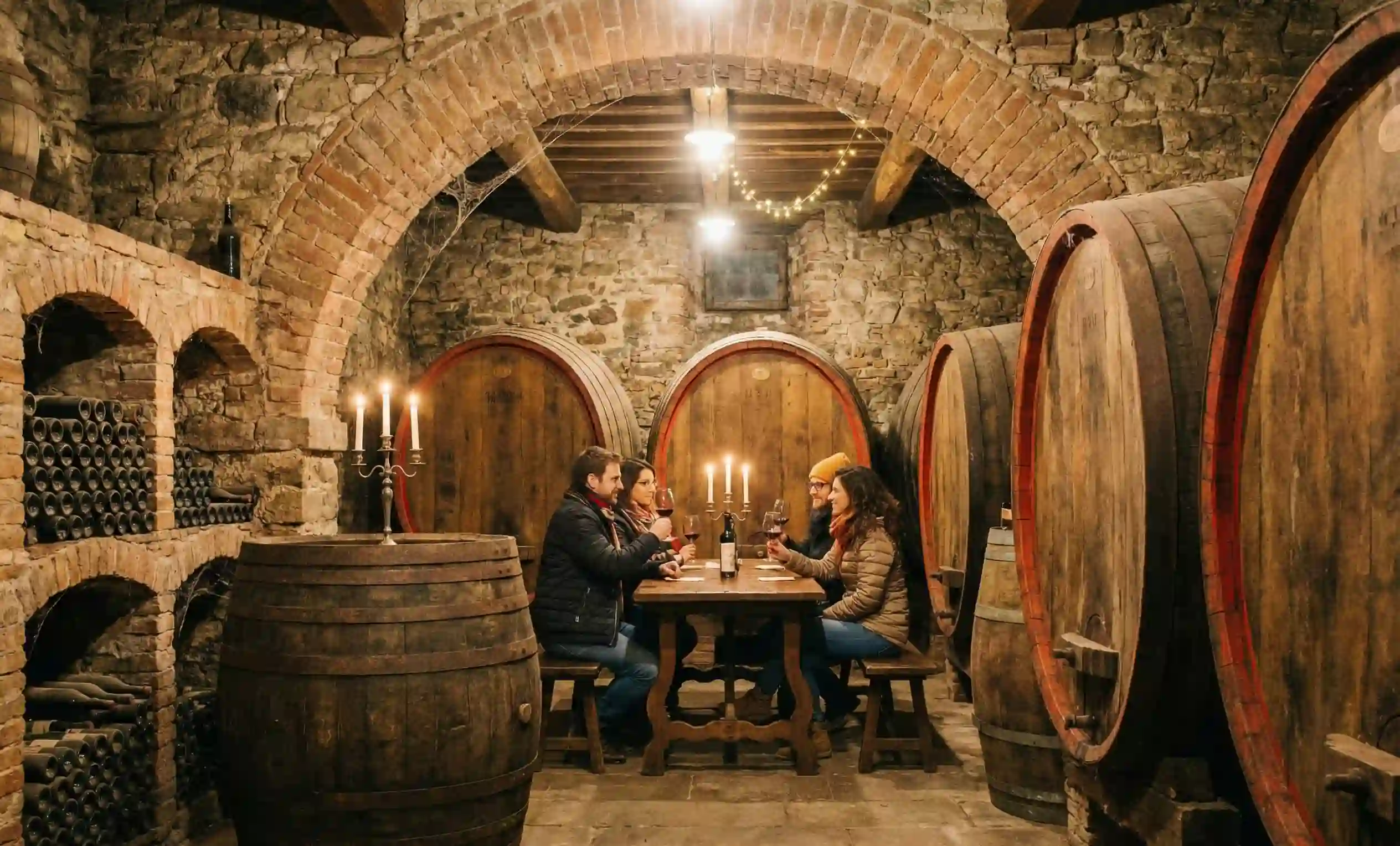
Traditional wine cellars in Chianti - where centuries of winemaking tradition continue today
Visiting Chianti Wineries: What You Need to Know
Booking Requirements
Unlike some wine regions where drop-in visits are common, most Chianti wineries require advance reservations—typically 24-48 hours minimum, though popular estates may need weeks of advance notice during peak season.
How to Book:
- Email: Most wineries list contact information on their websites. Email in English is widely accepted.
- Phone: Smaller estates may prefer phone bookings. Basic English is usually understood.
- Wine Tour Platforms: Services like Viator, GetYourGuide, or Winedering aggregate multiple winery visits.
- Hotel Concierge: Many accommodations have established relationships and can arrange visits.
Types of Winery Experiences
Basic Tasting (€15-30): Typically includes tasting of 3-4 wines with light accompaniments (olive oil, bread, maybe cheese). Duration: 45-60 minutes.
Cellar Tour + Tasting (€25-50): Guided tour of vineyards and/or cellars, explanation of winemaking process, followed by tastings. Duration: 1.5-2 hours.
Food Pairing Experience (€50-100+): Multi-course meal paired with estate wines, often including a tour. Duration: 2-3 hours.
Harvest Experience (Seasonal, €100-200+): Participate in grape picking, pressing, and cellar activities. Typically September-October only. Truly unforgettable.
Wine Tasting Etiquette
- Arrive on time: Tours are often scheduled back-to-back; lateness affects everyone.
- Pace yourself: Use spittoons provided if doing multiple tastings. No one judges—it's professional practice.
- Purchase expectations: While not obligatory, it's polite to buy at least a bottle if you've enjoyed a free or low-cost tasting.
- Designated driver: Plan accordingly. Even small tastings add up over a day.
Where to Eat Along the Via Chiantigiana
Chianti's culinary tradition is as celebrated as its wines. Here are standout dining options:
Traditional Trattorias
- Oltre il Giardino (Panzano): Simple, authentic cooking right on the main square. Famous for ribollita and pici.
- La Castellana (Castellina): Family-run institution serving classic Tuscan fare in a medieval setting.
- Osteria Le Panzanelle (Panzano): Intimate spot known for exceptional handmade pasta and local wines.
Fine Dining
- Ristorante Albergaccio (Castellina): Creative interpretations of Tuscan classics in an elegant villa setting.
- Solociccia (Panzano): Dario Cecchini's signature restaurant, offering a theatrical meat-focused experience.
Casual Bites & Picnic Supplies
For a spontaneous picnic among the vines, stock up at:
- Local alimentari: Every village has a small grocery with local cheeses, salumi, and bread.
- Winery shops: Many sell olive oil, preserves, and other products alongside wine.
- Panzano macellerie: Both Cecchini and other local butchers offer ready-to-eat items.
Where to Stay in Chianti
Luxury Agriturismos and Wine Resorts
- Castello di Spaltenna (Gaiole): Medieval monastery transformed into a luxury spa hotel.
- Villa Bordoni (Greve): Boutique hotel with exceptional restaurant and cooking classes.
- Castello di Fonterutoli (Castellina): Stay on a working wine estate in restored farmhouses.
Mid-Range Options
- Palazzo Leopoldo (Radda): Historic building in the village center with comfortable rooms.
- Villa Sassolini (Greve): Family-run villa with pool and vineyard views.
Budget-Friendly
- Agriturismos: Working farms offering rooms often include breakfast with homemade products. Expect €80-120/night for doubles.
- B&Bs in Villages: Simple rooms in historic buildings, usually €60-100/night.
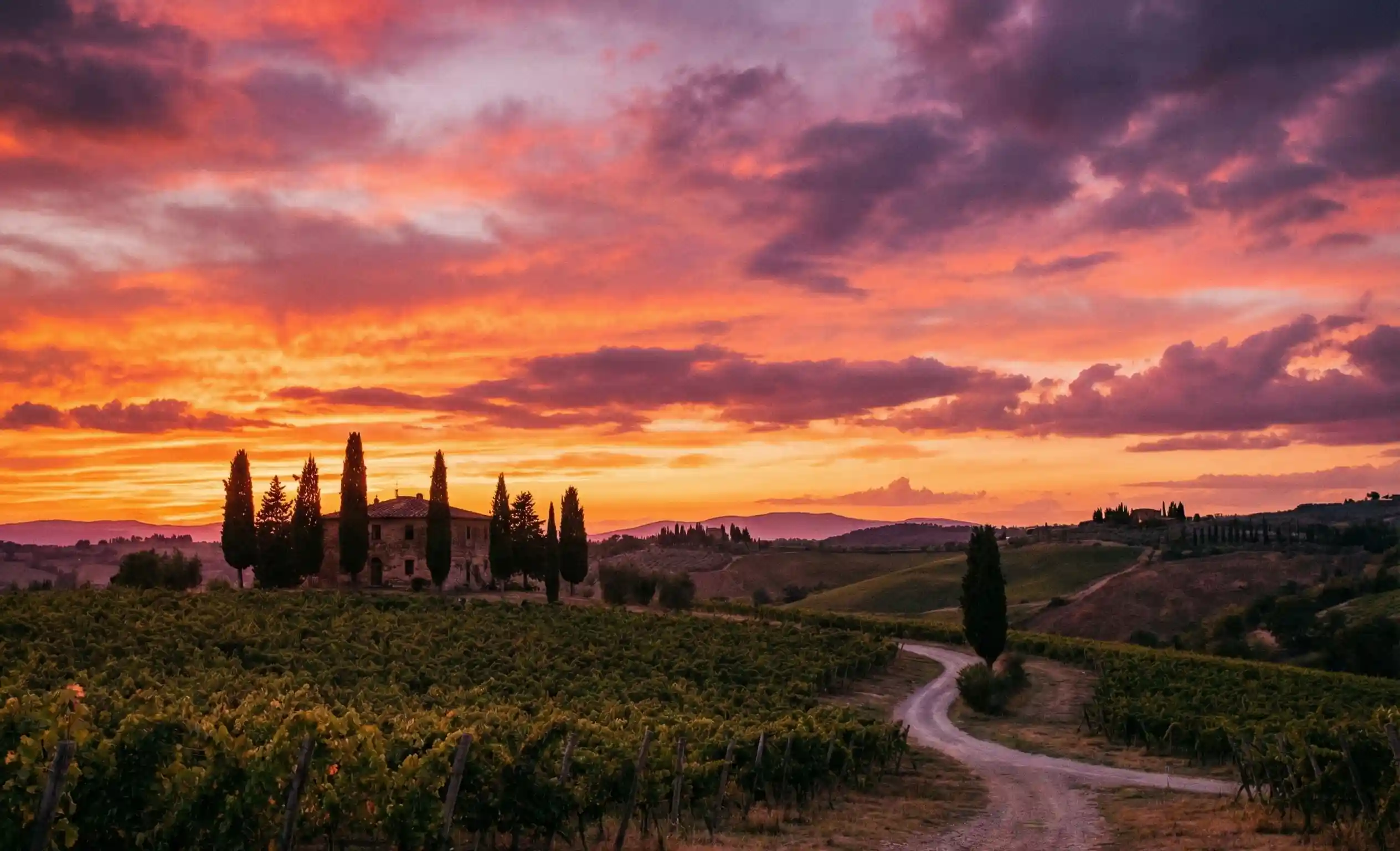
A Chianti sunset - the perfect ending to a day of wine exploration
Sample Itineraries for Your Chianti Wine Road Trip
One-Day Express Itinerary
- 9:00 AM: Depart from Siena or pick up rental from GS Auto Torrita di Siena
- 10:00 AM: Arrive Castellina in Chianti, explore historic center, climb fortress tower
- 11:30 AM: Winery visit (pre-booked) near Castellina
- 1:30 PM: Lunch in Panzano, visit Dario Cecchini's butcher shop
- 3:30 PM: Drive to Greve in Chianti, explore piazza and wine shops
- 5:00 PM: Visit Le Cantine for self-serve wine tasting
- 6:30 PM: Scenic drive back, stopping for sunset photos
Two-Day Leisurely Itinerary
Day 1:
- Morning: Greve in Chianti, Saturday market (if applicable)
- Late Morning: Winery visit (Verrazzano or similar)
- Lunch: Picnic at winery or trattoria in Panzano
- Afternoon: Explore Panzano, Dario Cecchini experience
- Evening: Dinner and overnight in Castellina area
Day 2:
- Morning: Castellina historic center, Via delle Volte
- Late Morning: Detour to Radda or Gaiole
- Midday: Lunch at winery restaurant
- Afternoon: Final winery visit, perhaps Castello di Brolio
- Late Afternoon: Continue to Siena or return to base
Three-Day Complete Experience
Add the Val d'Orcia extension (Montepulciano, Pienza, Montalcino) to create the ultimate Tuscan wine road trip. See our guide to the Toll-Free Tuscany Road Trip for detailed Val d'Orcia itineraries.
Beyond Wine: Other Chianti Experiences
E-Bike Vineyard Tours
For a different perspective, explore Chianti's strade bianche (white gravel roads) by electric bike. These quiet paths wind between vineyards and olive groves, inaccessible to cars, offering truly immersive countryside experiences. GS Auto offers e-bike rentals at €40/day—perfect for a morning vineyard ride followed by an afternoon winery visit.
Cooking Classes
Many wineries and agriturismos offer hands-on cooking classes where you'll learn to make fresh pasta, traditional sauces, and Tuscan desserts, paired with estate wines.
Olive Oil Tastings
Chianti produces exceptional extra virgin olive oil alongside its wine. Most wineries also produce oil and offer combined tastings—don't miss this complementary tasting experience.
Hiking and Walking
The Chianti region features excellent walking trails, from gentle vineyard strolls to challenging ridge hikes. The Via Francigena, the ancient pilgrimage route from Canterbury to Rome, passes through eastern Chianti.
Practical Information Summary
Quick Reference Guide
- Best Season: September-October (harvest) or April-June (spring)
- Driving Time: 1.5-2 hours direct Florence-Siena; full day with stops
- Winery Reservations: Required for most estates, book 24-48+ hours ahead
- ZTL Zones: Present in all villages—park outside historic centers
- Language: Basic English widely spoken at wineries; Italian appreciated
- Payment: Cash still preferred at some smaller wineries; cards accepted at larger ones
- Mobile Coverage: Spotty in valleys—download offline maps
- Designated Driver: Essential if doing multiple tastings
Conclusion: Your Chianti Adventure Awaits
The Via Chiantigiana isn't just a road—it's a journey through the heart of Italian wine culture, past medieval fortresses, through villages that time forgot, and across landscapes that have inspired artists for centuries. Whether you spend a single day or a leisurely week, this route delivers experiences that define Tuscan travel at its finest.
The key to a perfect Chianti wine road trip is balance: enough structure to hit the highlights, enough flexibility to follow unexpected discoveries. Book a few key wineries in advance, but leave room for that hilltop village that catches your eye or the roadside trattoria with smoke rising from its chimney.
Ready to experience Chianti's legendary wine roads? Book your rental car with GS Auto and let the adventure begin. Our Siena and Torrita di Siena locations put you perfectly positioned for this journey. With our local expertise and the right vehicle, you'll discover why the Via Chiantigiana remains one of the world's most celebrated driving routes.
Start Your Chianti Wine Road Trip
Rent the perfect vehicle for exploring Tuscany's legendary wine region. All our cars come with GPS, unlimited kilometers, and comprehensive insurance.
Book Your Rental Car NowQuestions? Contact our team or call +39 389 541 1634
